
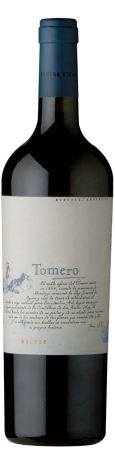
External search Google (images) Wine Advocate Wine Spectator Intl. Wine Cellar BurgHound WineZap Vinquire Wine-Searcher
Vintages 2008 2007 2006 2005 2004
From this producer Show all wines All tasting notes
|
| Community Tasting History |
| Community Tasting Notes (average 87.3 pts. and median of 87 pts. in 13 notes) | | | Tasted by Otto Nieminen on 9/20/2009: 14% abv. When I last tasted this I noticed too much vanillary oak - a year more has pretty well made that disappear (which I am very glad about). It is almost jammy in sweetness but does have some savoury/meaty/damp earth scent to counter it. As sweet on the palate as I expected from the scent, but it also has fair structure - but the structure is more like a frame that keeps the fruit within certain parameters than a backbone that would actually keep it upright. A big social event in a stuffy room, so the wine was too warm and hence showed a bit of alcohol. Decent QPR and very good interest level for such a foodless, cocktailish event - I don't think I would open one at home. (349 views) | | | Tasted by Hazeo on 6/10/2009 & rated 86 points: Good fruit but relatively light mouthfeel, a little simple but has good spices and backbone. Turned a little acidic after awhile. Enjoyable. 86-87 (222 views) | | | Tasted by davo22 on 4/9/2009 & rated 84 points: Decent but in this price category there are certainly many other Argentinian Malbecs out there that blow it away. (220 views) | | | Tasted by hutch on 1/10/2009 & rated 86 points: Good, earthy, but nothing really stands out about this wine. Solid and unremarkable, and that doesn't cut it with argentine wines these days. (250 views) | | | Tasted by laparka on 12/30/2008 & rated 87 points: second bottle, drinking with lowered expectations, this time it pleased. Still tannic, could probably wait another year or so. More concentrated than I remembered. Exc. QPR. (285 views) | | | Tasted by jeffal66 on 11/4/2008 & rated 91 points: A delightful rich flexible food wine. Earthy nose, balanced tannins, drinking fine at the moment. I could see this going with a range of foods, from red meat to Italian (I paired with a turkey lasagna and it was delicious). Strongly recommended. (267 views) | | | Tasted by Tarrant on 6/21/2008 & rated 90 points: Awesome, we're just loving Malbec at this point that it's been difficult to find a bad one - Dark purple, well concentrated with notes of plum, cherry, spice, tobacco and vanilla on the nose, well structured, with moderate tannins on the mid-palate, smooth with medium/long length (90 Points). (374 views) | | | Tasted by laparka on 5/15/2008 & rated 85 points: A little disappointing, just not that much there. An OK malbec with good qpr, but for the real deal you need to get a higher-end Pulenta, like Finca Vistalba Corte B. (496 views) | | | Tasted by john_5280 on 4/9/2008 & rated 88 points: Alcohol, vegetative, and plum on the nose. This one is going to need to breath...Certainly softens, but still a big wine more suited for food. Deep earthly flavors like beet, red pepper, black pepper, and jalapeño with strawberry and cherry on the finish. Probably a wine that you'll either really enjoy because it matches well with your meal or just too much. Perhaps a good hour or two decanting, or some years, may soften the edges while retaining a wide palate of flavors. 88 as an average, with the potential for +/- 3 points. I'm a huge fan of Tomero's Torrontes, I would give this one another try. Paid $15. Cheers! (537 views) | | | Tasted by uncle_fester on 3/8/2008 & rated 88 points: Solid Malbec. Solid fruit with nutty and earthy tones. Great QPR at $9.99. (586 views) | | | Tasted by jjclips2 on 2/21/2008 & rated 87 points: SF Wine Exchange (Hotel Captain Cook): A slight step up from the Arido Malbec tasted prior. Slightly more rustic. Herbal nose with brambly fruit, black raspberry, and a touch of raw oak. The palate is nice and full bodied with dusty tannins up front, again slightly rustic, with berries and fresh acidity. Different than other Malbecs tasted. (756 views) | | | Tasted by hutch on 2/20/2008: Wine Exchange Tasting: Unfortunately tried this after some bigger wines, and I think this hurt the showing of this wine. Pretty funky on the nose. Seemed slightly weak on the palate due to the prior wines, but probably in the 86-87 range... (813 views) | | | Tasted by cmlibs on 2/19/2008 & rated 88 points: (431 views) |
|
About red wine
Varietal character (Appellation America)
One of the traditional “Bordeaux varietals”, Malbec has characteristics that fall somewhere between Cabernet Sauvignon and Merlot. A midseason ripener, it can bring very deep color, ample tannin, and a particular plum-like flavor component to add complexity to claret blends. Malbec is a finicky vine whose fruit is prone to rot and mildew in the cool, damp coastal climate of Bordeaux. But ask a Bordelais grower why there’s no Malbec around, and you’ll more likely get a dismissive shrug and sniff than a viticultural analysis. It is known in much of France as Côt, and, in Cahors, also as Auxerrois. There are in fact hundreds of local synonyms, since Malbec at one time was widely planted all over the country. Sensitivity to frost and proclivity to shatter or coulure (a disease that results in premature fruit drop) is the primary reason that Malbec has become a decreasing factor in most of France. Although plantings in the Medoc have decreased by over twothirds since the mid-twentieth century, Malbec is now the dominant red varietal in the Cahors area. The Appellation Controlée regulations for Cahors require a minimum content of 70%. Malbec is also planted in Chile, and there’s relatively little and recent acreage in California and Australia. It is usually blended with other red varietals in these countries. But Malbec truly comes into its own in Argentina, where it is the major red varietal planted. Much of the Malbec vines there were transplanted from Europe prior to the outbreak of phylloxera and most is therefore ungrafted, on its own roots. Sadly, over the years the bug infested Argentina, too, and vineyards are being replanted on resistant rootstock. Happily, the vines thrive in the arid climate of the Mendoza region in the foothills of the Andes. Made in the context of this South American nation’s Spanish and Italian heritage, it produces a delicious wine that has almost nothing in common with Bordeaux except the color. Argentines often spell it “Malbeck” and make wines from it that are slightly similar in flavor to those made in Europe, but with softer, lusher structure, more like New World Merlot. Another difference is that where French examples are usually considered short-lived, Argentine Malbecs seem to age fairly well. Successful Argentine Malbec growers claim that, in order to develop full maturity and distinction, Malbec needs “hang time” even after sugar levels indicate ripeness. Otherwise, immature Malbec can be very “green” tasting, without its characteristic notes of plum and anise. Malbec in Argentina has come to be appreciated for a spicy white pepper characteristic, the aroma of violets, and sweet, jammy fruit. It is a seductive wine that is typically warm and generous in the mouth, with plenty of flesh, and very appealing when young. Almost always producing a ripe and fruity, even plummy wine, Malbec can take oak aging or show well without it; it’s juicy and quaffable when young but can benefit from aging, developing an intriguing complexity with time in the bottle. It can range in price from as little as $7 to more than $75. The true potential of Argentine Malbec, and indeed in the entire spectrum of Argentine wines, is demonstrated by the fact that many of the world’s most renowned winemakers have come to Argentina to make wine. Both the legendary California winemaker Paul Hobbs, and Michel Rolland of Bordeaux, one of the world’s most famous winemakers, have created very high-end Malbecs. It may be the Italian component in the country’s mixed Latin family tree that fosters the fact that Malbec is an exceptional companion with a broad range of food. Its well-balanced fruit-and-acid profile makes it a natural with rare beef (bear in mind that Argentina is cattle country), but it’s just as good with simple fare from burgers to fried chicken. Because if its balance and fruit, good pairings include cajun cuisine, calzones, cannelloni with meat, poultry, vegetable couscous, steak creole, Greek cuisine, deviled eggs, hummus, Indian cuisine, leg of lamb, Mexican cuisine with meat and chicken, pâté, spinach soufflé, and pasta. For cheeses, think of harder styles that are either waxed or oiled, such as Parmigiano Reggiano, Ricotta Salata, Romano, Asiago, Pont l’Eveque, Gruyere, Manchego, Cantal, Comte, old Gouda, old Cheddar, Baulderstone, Beaufort, Leicester, aged Chesire, Chevre Noir, Wensleydale, Tilsit, Iberico, Mahon, Roncal, and Mizithra.
Wines of Argentina
Argentina has been making wine since the 1500s, tracing its wine heritage back to Spain, France and, perhaps surprisingly, Italy. Italian immigration is second only to Spanish in Argentine culture, and the flavors of Italy show up strongly in the nation’s wine, food and cultural tradition. Historically, Argentina has kept much of its wine consumption at home, drinking most of the wine it makes. But we are now seeing more very serious Argentine wines north of the border, and Malbec is leading the movement. The wine-making region in Argentina ranges between the 22° and 42° South latitude. It spreads at the foothills of the Andean mountain range along over 2,400 km; from the province of Salta to the province of Río Negro, with a variety of climates and soils that makes each region a unique land. In general terms, the areas dedicated to vine cultivation are dry and arid with a low level of rain and humidity, determining factor as regards grape health. Abundant sunny days and thermal amplitude favor a good maturity and concentration of aroma and color in the grain. Soils are deep, permeable and poor in organic matter, decisive qualities at the time of obtaining good wine. Due to the low rain regime, irrigation is necessary. Water comes from the Andean range thaw, descending in the shape of rivers to become channels or ditches. Undoubtedly, the combination of these factors turns Argentina into a veritable oasis for the highest quality wine-making. Nevertheless, there is still a long way to go. Wine-making in Argentina, at the level that it achieves today, has a young history that goes back to a little more than 10 years ago. Technological progress, investment and some farsighted businessmen enabled a determining transformation. The province of Mendoza is the most traditional area in the viticultural industry, and is diverse enough to be divided into zones, according to their significantly different weather, height and soil characteristics. These include the Northern Zone, which is suitable for fruity whites and young reds, at a height from 600 to 700m; the Eastern Zone, with a height ranging from 600 to 700m, and the most productive zone in the province; the Uco Valley, a zone of colder weather and higher altitudes (between 800 and 1,400m over sea level); San Rafael, with heights ranging from 450 to 800m; and the High Zone of the Mendoza River, with heights ranging from 800 to 1,100m over sea level and various microclimates, this is the zone where almost all noble varieties have easily become adapted. It is a region that is remarkably well-suited to vine culture, protected from the Pacific’s cooling influence by the Andes and enjoying a long summer of cool nights and warm days, with a dry summer climate but plenty of water available from the region’s rivers. Malbec in particular is outstanding from this area, and it has clearly emerged as the star, the darling of both consumers and critics.
Wines of Mendoza
Argentine Malbec Producers
|
|