
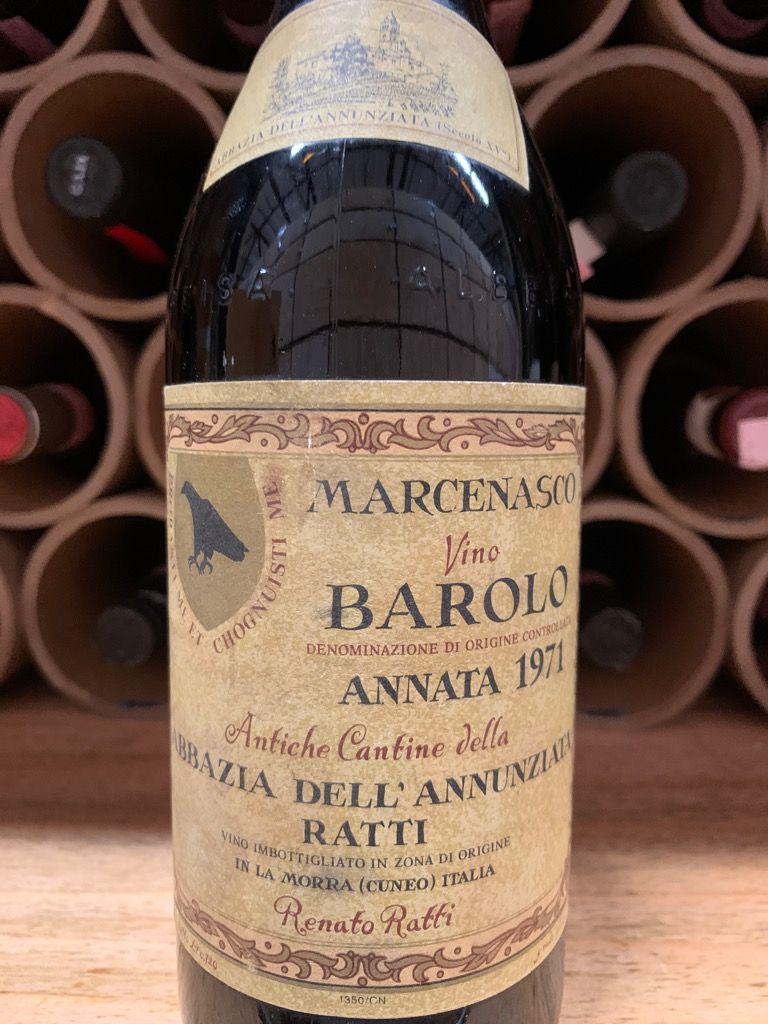
1971 Renato Ratti Barolo Marcenasco
Nebbiolo
Auction price: Register or sign-in to see quarterly averages
or visit the Wine Market Journal
Drink by: (Add My Drinking Window)
Advertisement
Popular Wines Like This
Who Likes This Wine(6)
-

ekessler
180 Tasting Notes
-
commissaire_aux_v…
52 Tasting Notes
-
Krassens
1,689 Tasting Notes
Community Tasting Notes (19) Avg Score: points
View all 19 Community Tasting Notes
What Do You Think? Add a Tasting Note
Pro Reviews
Professional reviews have copyrights and you can view them here for your personal use only as private content. To view pro reviews you must either subscribe to a pre-integrated publication or manually enter reviews below. Learn more.
View From the Cellar
-
By John Gilman
(Barolo “Marcenasco”- Renato Ratti) Login and sign up and see review text.
Sep/Oct 2010, Issue #29, Handicapping the 1958, 1964 and 1971 Vintages in Barolo and Barbaresco- Patience in Piemonte Has Such Fine Rewards -
By John Gilman
(Renato Ratti Barolo “Marcenasco”) Login and sign up and see review text.
Jan/Feb 2008, Issue #13, Recently Tasted Italian Red Wines: Outstanding Options Abound -
By John Gilman
(Barolo- Renato Ratti) Login and sign up and see review text.
Bonus Articles, Piemonte (tasted 2002-03)
NOTE: Some content is property of View From the Cellar.
Add a Pro Review
Add Your Own Reviews:
Wine Definition
- Vintage1971
- TypeRed
- ProducerRenato Ratti
- VarietyNebbiolo
- Designationn/a
- VineyardMarcenasco
- CountryItaly
- RegionPiedmont
- SubRegionLanghe
- AppellationBarolo
- Display optionsDefault
10/28/2022 - ekessler Likes this wine:
Fully mature and integrated. Light garnet. Rose, cherry flavors. Probably not the best stored bottle.
Do you find this review helpful? Yes - No / Comment
1/19/2019 - commissaire_aux_vins Likes this wine: 92 Points
Tastes like the cleanest, purest essence of a forest floor. Flavors of mushrooms and a faint hint of cherry and spice. Garnet, moderate acidity, no tannin.
Decanted for about an hour before consuming. I'd recommend drinking now; I don't see any room for this wine to improve.
Do you find this review helpful? Yes - No / Comment
12/30/2018 - MauriceE wrote:
We had several bottles of this wine, and this was not the best one. It was beautifully integrated and harmonious, but it lacked the energy and fruit of previous bottles. I guess it was not stored as impeccable as the other bottles. Nevertheless a joy.
Do you find this review helpful? Yes - No / Comment
11/9/2017 - clairenclarence wrote: 90 Points
nose:soil,mushroom,earth,faint cherry notes,leaf or grassy
palate:fantastic intensity,fabulous tertiary character,brainstorming integration.tis bttl is for drinkers tat simply only adore the tertiary character.a bttl simply nt from tis planet.if only with slightly more fruity character,den tis cud b a smashing sought after wine
Do you find this review helpful? Yes - No / Comment
11/8/2017 - Derek Darth Taster wrote: 94 Points
Bolognese night at Tim's. Cork broke. Poured slowly through filter into decanter. Drank fast.
Appearance of very fine sediments, medium intensity, garnet colour. Legs.
Nose is clean, NOT OXIDISED! Medium+ intensity, with aromas of sandy soil, mushrooms, tobacco ash, undergrowth earth, dried herbs, and dried tea leaves with more air. Developed.
On the palate, dry, medium+ acidity, medium alcohol, absolutely integrated almost non-existent tannins, medium body. Good medium+ flavour intensity, with flavours of sour red cherries, sour plum, savoury umami, sandy soil earth, mushrooms, tea leaves with more air. Long finish!
Very very good quality. End of life but very good in a tertiary way. Drink up fast and enjoy.
Back in the day this was labelled as 'Marcenasco Barolo Antiche Cantine della Abbazia dell'Annunziata'. From the era before Ratti became ultra-modern style.
Do you find this review helpful? Yes - No / Comment