
Selection Massale Trade Tasting
Terroir Natural Wine Merchant and Bar, San Francisco, California
Tasted Thursday, October 6, 2011 by rjonwine@gmail.com with 1,064 views
Introduction

Cory Cartwright and Guilhaume Gerard
Selection Massale is a wine import company based in the Oakland area. The principals are Cory Cartwright and Guilhaume Gerard, who originally met when both worked at San Francisco’s Terroir Natural Wine Merchant and Bar, where Guilhaume was a partner. They launched their new company last year, and it took months to get the licenses needed to bring their wines in through San Francisco’s port, but they’re fully in business now. The focus of their efforts is small, traditional producers, many of whom fall into the growing “natural” or “authentic” wine category. Most of their producers so far are in France–the Loire, Savoie, the Languedoc, Chablis–but they’ve also brought in some Sherries and Canary Island wine.
Full disclosure: Cory–and his delightful, marathon-running wife Emily–are friends of mine, and participate in my monthly Sunday Euro wine lunch gatherings. I’ve had a chance to taste many of the wines that Cory and Guilhaume are representing and now carrying, and I’m impressed by the line up. I’m also a fan of Cory’s palate. The prices are very reasonable; the producers are typically idiosyncratic, a little “odd” in their own appellations; and there’s a freshness and characterfulness to the wines that makes them quite appealing. In fact, I had one of my periodic debates with myself on whether to give point scores to the wines in this tasting, as the numerical scores don’t always seem to do them justice somehow. I rated them as I normally do, based on the complexity and quality of the wine, keeping in mind other similar wines from the same region, but without giving any extra points for the freshness and immediacy that these wines often convey. Many of these wines are made to drink young, and most of them are not for long aging, but they sure give a lot of pleasure in the short term. As Cory and Guilhaume truthfully write on their website, “These are wines that go with food, lighter wines made for drinking, not showing off.”
Selection Massale currently sells through a mailing list, to which they send out periodic offers–maybe two or three a month. To sign up for the list, go to their website: http://selectionmassale.com/
Cory and Guilhaume at an earlier tasting this year at Arlequin Wine
Flight 1 - Frantz Saumon (5 Notes)

Frantz Saumon is one of those idiosyncratic winemakers Cory and Guilhaume found in their travels through less frequented, traditional wine growing areas of France. His off-beat wit and fresh, minerally wines struck a chord with them. Frantz pursued a career in forestry in Canada before returning to France and getting his degree in enology. Upon graduating in 2002, he purchased a three-hectare vineyard in Montlouis and started making wine. He eventually converted his original vineyard to organic viticulture, and after a few years bought some more vineyard parcels so that today he owns six hectares of organically farmed vineyards in Montlouis. All but about half a hectare of these parcels is planted to white varieties, mainly old growth Chenin Blanc. Frantz likes to do the work in the vineyard himself, so the domaine is not likely to grow much bigger than that. He also started a small negociant business, however, drawing on organically farmed fruit from some of his neighbors, and from a vineyard in Vouvray. He calls the negociant operation, “Un Saumon dans la Loire.” Like most, if not all, of Cory and Guilhaume’s other producers, Frantz uses minimal sulfur–applying as little as possible, normally at bottling only.
I’ve had a couple of vintages of the Minérale + now, and it’s a stunning wine. It’s blended from fruit from all of Frantz’s plots around Montlouis, which have different types of soils, so there is complexity and great minerality showing. The Clos de Chênes is Frantz’s one single-vineyard bottling. The vines there are between 90-100 years old. The wine undergoes a long elevage in a single five-year-old tronconique (large, upright wood fermenter). It’s a delicate, complex wine that is delicious now, but that is also ageworthy. The petillant naturel is a sparkling wine Frantz makes from Gamay, using only one fermentation, instead of the two used for Champagne and many other sparkling wines. The wine is cooled down in tank before it has fermented completely dry, and then allowed to complete its fermentation in the bottle. The name, “la cave se rebiffe,” refers to a book and French film from the sixties by that name, which is part of a trilogy of films about an aging gangster. It literally translates as “the cellar bristled,” but in gangster slang, it refers to a “cave,” which is the term for a non-gangster mark or victim, and “se rebiffe” means the mark “hits back.” It’s a fun, lightly sparkling, minerally and tasty wine, definitely made for early drinking. The Vouvray, one of Frantz’s negociant efforts, was made as part of project by Frantz to learn more about his own Montlouis terroir by making wine in Montlouis’s better known neighboring appellation, on the other side of the Loire, Vouvray. There he works closely with a vigneron who owns 11 hectares in Vouvray, Sébastien Brunet. Under Vouvray’s appellation regulations, part of the elevage, at least, has to occur in Vouvray, so Frantz works with Sébastien in Sébastien’s cellar to produce the wine.
Flight 2 - Tripoz Burgundies (4 Notes)

Céline and Laurent Tripoz are a couple who started making wine in 1986 from a 1.5 hectare vineyard that Céline inherited from her mother outside the village of Loché, in the obscure appellation of Pouilly-Loché. This appellation sits between the much larger and significantly better known Pouilly-Fuissé AOC and the slightly larger Pouilly-Vinzelles. Most of the growers in this area sell their wine into the local co-operative, and that’s what Céline and Laurent did too until splitting from the co-op in 1990. By then they had a few more hectares and decided to make their own wine. In 2000, they started converting their vineyards to organic and biodynamic, with the help of Pierre Masson, one of France’s leading biodynamic consultants. Since 2006, their vineyards, which now amount to 11 hectares, are certified by both Ecocert and Demeter. Their Chardonnay plantings are a mix of old and young vines in vineyards composed of clay and limestone, including a bit of Les Murs, the area’s best site. They ferment in a mixture of old oak and stainless steel, using ambient yeast.
The Reserve was my favorite of what was poured from the domaine. It is selected from their best vineyards, primarily their portion of Les Murs. They only make it in favorable years, and raise it mainly in old oak, with a small percentage of new oak. This is very good white Burgundy-styled Chardonnay, very poised, with ageability. It’s priced at a very reasonable $23.22. I also enjoyed the very fresh tasting and flavorful Aligoté, and the Les Chênes bottling, from the ’08 and ’07 vintages respectively. I was less excited by the regular Mâcon-Loche bottling, but that may well be owing to the vintage–2009–which got quite ripe in Burgundy. I’m finding 2009, from the whites I’ve tasted so far, to be the kind of lower acid vintage in Chablis and Burgundy that does not appeal to me as much as more classic and balanced white Burg vintages, like 2004 and 2008.
Flight 3 - Monnier (1 Note)
Grégory Monnier started making wine in 2004, after a career as a chemist. He converted his grandparents home in Montaigu in the center of the Jura into a winery, and purchased a plot of land in the Chateau-Chalon appellation, from which the best vin jaunes are made. He purchased additional plots in the Jura that are almost totally planted to white grapes. His vineyards have been exclusively organic since 2006. Grégory lets the vintage dictate what kind of wines he’s going to make–sometimes more oxidative-styled wines or more sparkling, depending on how the grapes he’s pulled in will best show. He sometimes makes several different cuvees–based on vineyard and variety–but in 2007, when many of his plots were badly hit by hail, he opted to blend together the best of the grapes that survived, both the Savagnin and Chardonnay, into one bottling. He called it “Dilemme,” based on the dilemma the vintage presented him with. It ends up being 75% young vine Savagnin and 25% Chardonnay from 40-year-old vines. It was raised in neutral Burgundy barrels for one year. I thought it was quite good, complex and yeasty, and is a nice buy at $18.17.
Flight 4 - Belluard (3 Notes)

The last of Selection Massale’s off-the-beaten track wines at this tasting were from Savoie, the eastern French region in the Alps, near the Swiss border. Dominique and Patrick Belluard are the third generation of the family to run Domaine Belluard, which was established in 1947. They are located in Ayse, and are the wine producers whose estate lies closest to Mont Blanc. The family vineyards include one of the world’s few plantings of Gringet, a nearly extinct variety. This grape was formerly thought to be the same as Savagnin, but DNA testing in recent years revealed that it is not, and that it is probably an older variety. According to Cory and Guilhaume, the Belluards own 12 of the remaining 22 hectares in the world planted to this grape. Dominique, who is an enology school grad, is the winemaker, and he has taken a lot of steps to get the most out of these rare plantings. He decided to convert the vineyards to biodynamics in 2001. He also moved fermentations from old oak barrels (he claims they deaden the flavor), to stainless steel, and, more recently, to concrete eggs (for the whites, feeling that the steel didn’t allow the wines to breathe sufficiently) and clay amphorae (for a small amount of Mondeuse). There is no malolactic fermentation. I particularly liked the savory, minerally qualities of the two Gringet-based sparkling wines–the non-vintage Methode Traditionnelle and the 2006 Terroir de Mont Blanc Brut Zero. These wines are made by the methode champenoise. The non-vintage spent two years on its lees before disgorgement, while the 2006 was aged for four years.
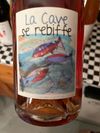
NV Un Saumon dans la Loire Petillant Naturel 'La cave se rebiffe' 90 Points
France, Vin de France
Medium pink color; tart pink grapefruit nose with a sense of salt; very tasty, pink grapefruit, mineral palate with good acidity and grip; medium finish
Post a Comment / Do you find this review helpful? Yes - No
2010 Un Saumon dans la Loire Montlouis-sur-Loire 88 Points
France, Loire Valley, Touraine, Montlouis-sur-Loire
Light yellow color; natural, apple, apple cider, VA nose; tangy, very tart apple, cider, mineral palate; medium-plus finish
Post a Comment / Do you find this review helpful? Yes - No
2010 Un Saumon dans la Loire Montlouis-sur-Loire Minéral + 91 Points
France, Loire Valley, Touraine, Montlouis-sur-Loire
Light yellow color; intriguing, tart apple, mineral, chalk nose; tasty, tart pear, chalk, tart apple, essence of tart crisp apple, mineral palate; medium-plus finish
Post a Comment / Do you find this review helpful? Yes - No
2009 Frantz Saumon Montlouis-sur-Loire Le Clos du Chêne 92 Points
France, Loire Valley, Touraine, Montlouis-sur-Loire
Light yellow color; floaty, apple, cream, lemon cream nose; light, dry and very tasty, floral, lemon cream, apple cream, very tart pear palate; medium-plus finish
Post a Comment / Do you find this review helpful? Yes - No
2009 Un Saumon dans la Loire Vouvray 89 Points
France, Loire Valley, Touraine, Vouvray
Light yellow color; tart apple, apple cider nose; tangy, fresh, tart apple, mineral, tart peach palate; medium-plus finish
Post a Comment / Do you find this review helpful? Yes - No