
2012 ZAP: Grand Tasting and K&L Tasting
The Concourse, San Francisco, and K&L, Redwood City, California
Tasted Friday, January 20, 2012 - Saturday, January 28, 2012 by rjonwine@gmail.com with 3,652 views
Introduction

his was my first time attending the annual grand tasting of the Zinfandel Advocates & Producers’ Zinfandel festival. This was the event’s 21st year. I found it a tremendously well organized gathering, especially from the standpoint of a media representative, thanks to the terrific program booklet, helpful lists of the producers arranged by different categories, and four-hour tasting window for trade and media before the public portion of the event. I also appreciated the quiet room they set aside, lined with one or two bottle samples from almost every producer, to which media could adjourn and taste at their own pace once the main floor got quite crowded by mid-afternoon.
All the prior participants I spoke with were delighted with the event’s move this year from Fort Mason to the Concourse Convention Center. The new venue has more space, is carpeted (cutting down on the noise level), has easy access along the side for producers for set up, and is in a more convenient location in the City, with better rapid transit and parking access.
In the almost seven-hour time period I had for tasting at Saturday’s event (I took out about 20 minutes to scarf down a sandwich), I managed to sample 216 wines, 213 of them Zins or Zin blends. The preceding week, at a tasting event with several ZAP producers at K&L, I’d tasted an additional 14 Zins, so my tasting notes below comprise a total of 227 Zins and Zin blends between the two events, from a total of 132 producers.
Some of the highlights for me included Zinfandels from Italy (Accademia dei Racemi) and South Africa (Blaauwklippen), and extremely old vine Zins from Bedrock, Limerick Lane, Puccioni and Vino Noceto. The producers responsible for at least one wine that I rated 91 points or higher were Bedrock, Black Sears, Bucklin, Carol Shelton, Charter Oak, Collier Falls, Deerfield Ranch, Gamba, JC Cellars, Limerick Lane, Mauritson/Rockpile Winery, Ottimino, Outpost, Puccioni, Ravenswood, Ridge, Robert Biale, Storybook Mountain, Tofanelli, Turley, Vino Noceto and Woodenhead.
The most outstanding wines of the tasting, for me, wines that I rated 92 points or higher, were:
2010 Bedrock Wine Co. Zinfandel Old Vine - 93 points
2010 Bedrock Wine Co. The Bedrock Heirloom - 92 points
2009 Black Sears Winery Zinfandel Estate - 93+ points
2006 Black Sears Winery Zinfandel Estate - 92 points
2007 Carol Shelton Wines Zinfandel Wild Thing Cox Vineyard - 92 points
2009 Charter Oak Zinfandel Monte Rosso Vineyard - 93 points
2009 Limerick Lane Zinfandel Block 1910 - 93+ points
2010 Mauritson Wines Zinfandel Dry Creek Valley - 93 points
2010 Rockpile Winery (Mauritson) Zinfandel Westphall Ridge Vineyard - 92+ points
2010 Rockpile Winery (Mauritson) Zinfandel Rockpile Ridge Vineyards - 93 points
2009 Ottimino Zinfandel Ottimino Vineyard - 92 points
2009 Puccioni Zinfandel Old Vine - 92 points
2007 Ridge Zinfandel Pagani Ranch - 92+ points
2008 Vino Noceto Zinfandel OGP Grandpère Vineyard - 92+ points
2007 Vino Noceto Zinfandel OGP Grandpère Vineyard - 93 points
2009 Woodenhead Zinfandel Braccialini - 92 points
The range in quality was much wider than I find in the typical large scale tasting. Besides the excellent wines listed above, and many that were nearly as good, or just a notch or two below, I found several wines that were virtually impossible to drink, and many that were very high in alcohol, low in acidity and/or dominated by oak, causing me to score them in the low 80s to mid-70s.
I know that it is hard to grow Zinfandel, in part because individual grapes tend to ripen at very different rates. It seems clear from a tasting like this that it is not so easy to make very good Zinfandel either. I applaud the producers who manage to do so, crafting complex and intensely flavorful wines, often from very old, extremely low yielding vines.
For more details on some of the producers, and my complete tasting notes and scores, see below.
Flight 1 - Accademia dei Racemi (3 Notes)

This winery in Puglia has Primitivo vines that are 30-40 years old. Their wines had the highest acidity of any I tried at the grand tasting, along with a distinctive note of honey on the nose. They were probably among the lowest in alcohol too, at 13%.
Flight 2 - Alderbrook (1 Note)
Flight 4 - Amphora (1 Note)
Flight 5 - Ancient Peaks (1 Note)
Flight 6 - Artezin (1 Note)
Flight 7 - Austin Hope (1 Note)
Flight 8 - B.R. Cohn (1 Note)
Flight 9 - Baldwin (1 Note)
Flight 10 - Ballentine (1 Note)
Flight 11 - Barefoot (1 Note)
Flight 12 - Bedrock (2 Notes)
I previously wrote here http://www.rjonwine.com/california-wine/bedrock-wine-with-real-personality/ about the remarkable wines being made by Morgan Twain Peterson under this label, including very complex and ageworthy Zins from very old vineyards. Morgan, whose father is Ravenswood's Joel Peterson, sources Zin from great heritage vineyards like Monte Rosso and his family's own Bedrock Vineyard. These are truly outstanding Zins, which should age into burnished beauties, much like Ridge's best Zins.
Flight 13 - Beekeeper (1 Note)

Ian Blackburn, the highly energetic entrepreneur behind L.A.'s very successful Learn About Wine (LearnAboutWine.com), is now making his own wine under this label with the help of Mauritson's Clay Mauritson. The '09 we tasted is his very first vintage. The wine boasts delicious, ripe Rockpile fruit, but I would like to see a little more acidity and a gentler use of new oak in this very high priced offering. At $60, it was one of the most expensive bottlings of the day. Nonetheless, Ian and Clay are a formidable team, and I am sure that this new label will find a following.
Flight 14 - Bella (3 Notes)
Flight 15 - Benessere (1 Note)
Flight 16 - Berryessa Gap (1 Note)
Flight 17 - Blaauwklippen (2 Notes)


This was my very first Zinfandel from South Africa, where there is precious little Zin to be found. The wines are made from 35-year-old vines, thought to have been brought to the country from Italy. They have also purchased some vines from California in recent years, which should be going into production soon. The nose on the dry Zin was most unusual and savory, and reminded me more than any wine I've ever smelled of one of my favorite Spanish treats, pata negra.
Flight 18 - Black Rock (1 Note)
Flight 19 - Black Sears (3 Notes)


These are always remarkable, powerful, complex wines, with a distinctive black pepper note. In 1979, Joyce Black and Jerre Sears purchased land at the top of Howell Mountain. They were partners with Mike Beatty in Howell Mountain Vineyards before selling the HMV label in order to focus on the Black Sears project. They farm the vineyards organically and biodynamically. They have 17 dry farmed acres of Zinfandel, planted in the ’70s with bud wood from the Hayne Vineyard, and six acres planted to Cabernet Sauvignon and small parcels of Cabernet Franc and Syrah. Black Sears’ Zinfandel and Cabernet Sauvignon have gone into wines made by Robert Craig, Elyse, Schrader, T-Vine and Turley, among others. In 1997, the family started producing a few hundred cases per year under their own label. Their winemaker currently is Thomas Brown; the '06 was made by the equally renowned Ted Lemon.
Flight 20 - Bogle (2 Notes)
Flight 21 - Bonneau (3 Notes)
Flight 22 - Bota Box (1 Note)
Flight 23 - Brazin (1 Note)
Flight 24 - Brown Estate (2 Notes)
Flight 25 - Brutocao (1 Note)
Flight 26 - Bucklin (3 Notes)


Flight 27 - Buena Vista (1 Note)
Flight 28 - C.G. di Arie (1 Note)
Flight 29 - Calstar (1 Note)
Flight 30 - Carlisle (2 Notes)
Flight 31 - Carol Shelton (3 Notes)

Santa Rosa-based Carol's been a winemaker for 30 years, and Zin is her favorite variety. I think her Wild Thing Cox Vineyard is a very good buy for about $19, made entirely with indigenous yeasts.
Flight 32 - Cedarville (1 Note)
Flight 33 - Cellar No. 8 (1 Note)
Flight 34 - Chacewater (1 Note)
Flight 35 - Charter Oak (2 Notes)


I've enjoyed Charter Oak's Zins in the past, but the '09 Monte Rosso is the best one yet. Robert Fanucci comes from a winemaking Italian-American family, but he didn't try his hand at making wine until 1986, after losing his job at a securities firm. He relies on indigenous yeasts and attributes the special qualities of his wines to thrice daily punch downs using antique equipment inherited from his grandfather.
Flight 36 - Chateau Montelena (2 Notes)
Flight 37 - Chatom (1 Note)
Flight 38 - Chronic (1 Note)
Flight 40 - Cline (1 Note)
Flight 41 - Collier Falls (2 Notes)

These were remarkably good Zins in a very ripe style. Barry and Susan Collier launched Collier Falls after buying 20 acres of vineyards in the northwest corner of Dry Creek Valley from Ferrari-Carano in 1997. They planted the Primitivo vines that same year. I really like the unique mint and menthol notes on the Primitivo, and was impressed with the complexity of the Zin, which Barry, pictured above, said was less ripe than usual in 2008. The winemaker is Marco DiGulio, who came to Collier Falls from Lokoya. The wines see extended maceration and cold soaking. They are aged in a mix of French and American oak for 18 to 24 months.
Flight 42 - Cycles Gladiator (1 Note)
Flight 43 - Cypher (1 Note)
Flight 44 - D-Cubed (1 Note)
Flight 45 - Dashe (5 Notes)

Flight 46 - De Loach (1 Note)
Flight 47 - Deep Purple (1 Note)
Flight 48 - Deerfield Ranch (3 Notes)
Flight 49 - Del Carlo (1 Note)
Flight 50 - Della Costa (1 Note)
Flight 51 - Dogwood (1 Note)
Flight 52 - Dono dal Cielo (1 Note)
Flight 53 - Dry Creek Vineyard (3 Notes)
Flight 54 - Easton (1 Note)
Flight 55 - Edmeades (1 Note)
Flight 56 - Folie à Deux (1 Note)
Flight 57 - Fontanella Family (1 Note)
Flight 58 - Four Vines (1 Note)
Flight 59 - Frank Family (1 Note)
Flight 60 - Fritz (2 Notes)
Flight 61 - Gamba (3 Notes)

Flight 62 - Gann Family (1 Note)
Flight 63 - Gnarly Head (1 Note)
Flight 64 - Gregory Graham (1 Note)
Flight 65 - Grey Wolf (1 Note)
Flight 66 - Guglielmo Family (1 Note)
Flight 67 - Gustafson Family (1 Note)
Flight 68 - Haraszthy Family (1 Note)
Flight 69 - Harney Lane (2 Notes)
Flight 70 - Hartford (1 Note)
Flight 71 - Headbanger (1 Note)
Flight 72 - Hendry (1 Note)
Flight 73 - Hunt (1 Note)
Flight 74 - Ironstone (3 Notes)
Flight 75 - Jaxon Keys (1 Note)
Flight 76 - JC Cellars (5 Notes)

Flight 77 - J. Dusi (3 Notes)
Flight 78 - Joel Gott (2 Notes)
Flight 79 - Kenneth Volk (1 Note)
Flight 80 - Klinker Brick (1 Note)
Flight 81 - Limerick Lane (3 Notes)

I am indebted to Doug Wilder for alerting me that the new Limerick Lane Zins, starting with the '09 vintage, were worth checking out. The winery was sold last year to Jake and Alexis Bilbro. Jake, pictured above, is head of sales and marketing for Marietta Cellars, where his brother Scot is assistant winemaker. Scot is the new winemaker for Limerick Lane. Together Jake and Scot have selected blocks of old vines for these special bottlings, and the 1910 bottling, especially, was spectacular.
Flight 82 - Mauritson/Rockpile Winery (3 Notes)


I profiled Clay and his family's vineyard in part III of my report on a visit last year to Zinfandel's Mecca, Dry Creek Valley here: http://www.rjonwine.com/california-wine/dry-creek-valley-iii-rockpile-ridge-vineyard/ The Mauritson family has been growing grapes in Dry Creek Valley since 1868. Clay’s great-great-great grandfather, S.P. Hallengren, was a pioneer grape grower in the Rockpile region, where he first planted vines in 1884. He shipped all his wine back to his native Sweden. The family’s Rockpile homestead and ranch grew to 4,000 acres by the early 1960s when all but 700 ridge top acres was taken by the Army Corps of Engineers to develop Lake Sonoma. The family currently manages 310 vineyard acres in the Dry Creek Valley, Alexander Valley and Rockpile appellations. It was Clay, the talkative one, who got the family into making wine when he returned after graduating the University of Oregon in 1997. His first vintage under the Mauritson label was with a Dry Creek Zin in 1998. He worked in sales and marketing at Kenwood Vineyards for five years. He started making wine full time under the Mauritson and Rockpile labels in 2002 after having also worked under the winemakers at Taft Street Vineyards and Dry Creek Vineyards. I have very much enjoyed his wines, including a powerful Petite Sirah and a Bordeaux blend called Buck Pasture. These Zins were easily among the best of the day.
Flight 83 - Mazzocco (1 Note)
Flight 84 - McCay (1 Note)
Flight 85 - Milliaire (1 Note)
Flight 86 - Miro (1 Note)
Flight 87 - MoniClaire (1 Note)
Flight 88 - Montevina/Terra d'Oro (3 Notes)
Flight 89 - Mounts Family (1 Note)
Flight 90 - Murphy-Goode (1 Note)
Flight 91 - Novy (1 Note)
Flight 92 - Opolo (1 Note)
Flight 93 - Ottimino (7 Notes)

Flight 94 - Outpost (1 Note)
Flight 95 - Pech Merle (1 Note)
Flight 96 - Pedroncelli (2 Notes)
Flight 97 - Proulx (1 Note)
Flight 98 - Puccioni (1 Note)

I previously profiled Puccioni in part I of my report on a visit to Dry Creek Valley here: http://www.rjonwine.com/california-wine/dry-creek-valley-tale-of-generations/ Starting with the 2007 vintage, the Puccioni wines are based on grapes grown on Glenn Proctor’s family’s ranch, where his great grandfather, Angelo Puccioni, who came to the area from the small village of Coselli, Italy, first planted Zinfandel in 1904. The ranch sits in a small valley with up slopes on each side. The elevations go from 400 to 1000 feet. The vineyards are planted on the west facing slopes. The hillside vineyards are planted to old clone Zinfandel, on St George and 1103 Rootstock, largely head trained. The ranch’s 15 acres of vines are largely Zin, and a field blend in the old vine vineyard planted in 1904. One acre is planted to Alicante Bouchet and another to Petite Sirah. I like their Petite Sirah as well. This old vine Zin is worth tracking down.
Flight 99 - Rancho San Miguel (1 Note)
Flight 100 - Rancho Zabaco (1 Note)
Flight 101 - Ravenswood (7 Notes)


Joel Peterson learned winemaking working with Joseph Swan. He launched his Ravenswood label in 1976, but continued working his day job in the lab at Sonoma Valley Hospital until 1992. He has been tremendously influential in helping to promote Zin as the source of serious, powerful wines. He was also so successful at making wine that people wanted to buy that the company was selling 440,000 cases a year by the time Joel sold the label to Constellation Brands in 2001. Joel has continued to oversee production. For a large production winery, these are remarkably good wines.
Flight 102 - Ridge (3 Notes)

Flight 103 - Robert Biale (3 Notes)

These are always remarkable wines--ripe and powerful, but also complex and balanced. The Biale family have been growing Zinfandel since 1937. The winery currently owns and farms 24 acres of vineyards, which supplies about 30% of the grapes for their wines. The winemaker is Steve Hall.
Flight 104 - Rock Wall (8 Notes)
Flight 105 - Rosenblum (1 Note)
Flight 106 - Saddleback (1 Note)
Flight 107 - Scott Harvey (1 Note)
Flight 108 - Seghesio Family (7 Notes)
Flight 109 - Sobon Estate (2 Notes)
Flight 110 - Soda Rock (2 Notes)
Flight 111 - Spenker (1 Note)
Flight 112 - St. Amant (2 Notes)
Flight 113 - Starry Night (2 Notes)
Flight 114 - Steele/Shooting Star (4 Notes)
Flight 115 - Stonehedge (2 Notes)
Flight 116 - Storybook Mountain (1 Note)
Flight 117 - Talty (2 Notes)

Flight 118 - The Chancellor of Zin (1 Note)
Flight 119 - The Federalist (2 Notes)
Flight 120 - Tin Barn (2 Notes)
Flight 121 - Tofanelli Family (1 Note)
Flight 122 - Trader Moon/Old Moon (1 Note)
Flight 123 - Trentadue (2 Notes)
Flight 124 - Tres Sabores (1 Note)
Flight 125 - Turley (2 Notes)
Flight 126 - Valdez Family (1 Note)
Flight 127 - Van Ruiten (2 Notes)
Flight 128 - Victor Hugo (1 Note)
Flight 129 - Villa Toscano (2 Notes)
Flight 130 - Vino Noceto (2 Notes)

Vino Noceto is a project started by owners Jim and Suzy Gullett focusing primarily on Italian varieties, especially Sangiovese inspired by Chianti Classico. The winemaker is Rusty Folena. Their Zin bottling is from the ancient 19-acre Grandpère Vineyard, planted in 1868 with the oldest known clone of Zin in the United States from the vineyard documented as the longest producing in the country. These are remakably complex and balanced wines, that seem like a comparative bargain at $29.
Flight 131 - Woodenhead (4 Notes)

I've been following Nikolai Stez's career for a long time. He was assistant winemaker at Williams-Selyem before launching his own label. He makes delicious Pinots, Syrahs and Zins. I was very sorry to hear that the vines that were the source of the tasty Braccialini bottling were ripped out this year. Pictured on the right is Nick's business partner Zina Bower, and on the left is her buddy Erin, who also happens to be a longtime friend of mine.

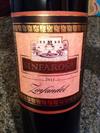
2010 Felline Primitivo di Manduria Sinfarosa 87 Points
Italy, Puglia, Primitivo di Manduria
(1/28/2012)
Barrel sample - focused, honey, berry nose; tart berry, tart plum palate with near medium acidity; medium finish 87-89 points
Post a Comment / Do you find this review helpful? Yes - No
2008 Felline Primitivo di Manduria Sinfarosa 88 Points
Italy, Puglia, Primitivo di Manduria
(1/28/2012)
Medium dark purple red violet color; aromatic, dried herb, tart black fruit nose; dried herb, oregano, tart black fruit palate with near medium acidity; medium finish
Post a Comment / Do you find this review helpful? Yes - No
2010 Felline Primitivo Salento IGT 88 Points
Italy, Puglia, Salento IGT
(1/28/2012)
Barrel sample - intriguing, honey, baked berry nose; tart berry, tart black fruit palate with medium acidity; medium-plus finish 88-90 (60% Zinfandel, 40% Malvasia)
Post a Comment / Do you find this review helpful? Yes - No