
Megamoon Part VI: Salta (Argentina)
Cafayate, Molinos, Cachi, and Salta
Tasted Thursday, November 5, 2015 - Monday, November 9, 2015 by MC2 Wines with 715 views
Introduction
After Mendoza we flew up to Salta and did the loop around following the wine trail all the way to Cachi and then coming back through the main city. The only word to describe it was stunning. The mountains are mostly made of sandstone and the wind/water have created amazing structures with the erosion. Different minerals have led to a variety of colors (red, blue, green, grey) and all of the canyons, lookouts, and just standard drive were breathtaking. We flew into the Salta airport and spent the first two nights in Cafayate (where most of the wineries are located), then one night in Molinos (with a visit to Colome), then a final night in Cachi before heading towards the capital. Our focus was wine, but we took advantage of the scenery as well as the food (especially the empanadas which we consumed at most every meal).
Overall we enjoyed the wine (especially at the price). It was especially fun at dinner where the most expensive bottle was no more than $80 USD (being from NYC we are used to wine lists where the cheapest wines might just fall in that category). This meant we got to try many of the high end wines without completely breaking the bank.
While the wine region is very old, the idea of premium wine (as with other parts of Argentina) has really only taken on importance in the last 15 to 20 years and so there are some new wineries which have popped up which have great potential (Piattelli), but who are still using rather young root stock and need more time. There are others (Colome, Yacochuya) where the vines are older than most of the rest of the world and unique since it's original root stock. It was interesting to hear that may of the locals preferred their wines young with a lot of oak flavors and with a mixed preference on the prevalence of fruit.
These are also some of the tallest vines in the world (if not actually the tallest). We drank wine from vineyards that were almost 3k meters above sea level. Most of the wineries credited these conditions with creating a more concentrated flavor in the wines. Organic and biodynamic is very popular in the area and many of the wineries follow those practices. In addition, given the very dry climate water is incredibly important and the vines are all irrigated. Most wineries owe their placement due to proximity with one of the ice melting streams from the mountains.
We were incredibly lucky to be accompanied/guided by Pablo of Altro Tourism. He quickly learned that we were serious about our wine (and perhaps less serious about seeing our 20th fermentation tank) and thus he helped us to customize our itinerary to be exactly what we were looking for. I'd be hard pressed to name a place we visited where the person in charge was not a friend. It was also very nice to have someone else to drive given the rather precarious mountain roads, lack of signage at key points, and our proclivity to want to drink the wine at the places we were visiting.
*Note: Earlier parts of the Megamoon include Napa (Part I), Malaysia (Part II: non wine), Singapore (Part III: non wine), Chile (Part IV), Mendoza (Part V)
Flight 1 - Domingo Hermanos (Cafayate) (4 Notes)
Perhaps my least favorite of the wineries. the only positive I'd really note is they start their tastings at 9:30 in the morning. Many of the wines have the Domingo Molinas label (not to be confused with Domingo Molina which is one of the more exclusive wineries in the area and which only does barrel tastings). We ran through a set of very reasonably priced wines that came across as more of the mass produced, cheaper type. Perhaps the most interesting piece was seeing these large 5L jugs which the winery sells for about $10 USD (we were tasting in their 'premium' category, but they did show them as part of the production). I thought the white and dessert were most reasonable in this tasting and Mike would have said just the white.
Flight 2 - Piattelli Vineyards (Cafayate) (8 Notes)
A very new project - the land was purchased back in 2007 and the vines were planted in 2008 and 2009. The first vintage was 2012 for many of the wines (on the earlier side) and we were mainly tasting 2013s. We did the Grand Reserva tasting (150 Argentinian pesos per person) which included some wines from their vineyards in Mendoza/Uco Valley as well. Our favorite was the Cabernet from Tupangato, although with some more years I could see the Cafayate location making some really nice wine. We did lunch here as well (empanadas, goat stew, and a piece of steak). The highlight of the meal though was the dessert which was a bowl of dulce de leche in 3 different forms. Yum!
Flight 3 - Yacochuya (Cafayate) (3 Notes)
We added this to the tour given our proximity at Piattelli and an article we found on the Winerist which recommended the wine. This is another one of Michael Rolland's consulting projects. The Torrontes and San Pedro were part of the standard tasting. In addition we opted to buy a bottle of the Yacochuya (they were offering 2010 and 2007 - as we like the aged wines we went for the older). They were kind enough to pour the tastings and then to recork the bottle so we could take it with us to future locations. The Yacochuya was my favorite wine of the day and one of my favorites of the trip. Just awesome (although still young).
Note - for the non-Spanish speakers this winery did not speak English although Pablo did a translation for us and so we were able to ask all of our questions and the person pouring was very knowledgeable.
Flight 4 - Nanni (Cafayate) (4 Notes)
Nanni was one of the purely organic wines. All were very approachable and easy to drink now. Many would go well with food. And the people who ran the tasting were very lovely although here again Pablo translated for us.
Flight 5 - El Pourvenir (Cafayate) (7 Notes)
Our last winery of the day and one that we were lucky to do as we didn't have an appointment. While we were waiting on the street to see if it was possible we ran into a couple traveling from Australia and so the four of us ended up tasting through the line-up. I particularly found the Rose interesting as it was much lighter than what we saw at other places although my favorite was easily the 2007 Cabernet. This was a good winery, but not quite at the level as the Colome or Yacochuyas of the world.
Flight 6 - Dinner @ Patios de Cafayate (Cafayate) (1 Note)
We heard great things about the restaurant at the hotel and figured we needed to try dinner. Opted for a five course tasting menu where one could clearly have served both of us. Our first dish was fried langostinos (shrimp), then goat ravoli in a demi-glace, veal filet, cheese plate, and finishing with a torrontes ice cream on a pastry. As the winery attached to the hotel was only open in the morning (when we were at our appointments at other places) we opted to try an El Esteco (the Altimus). It was a very intense wine and really only worked with the veal dish. Overall, a decent dinner, but also the most expensive meal we ate on the trip and certainly not the best.
Flight 7 - Bodega el Cese (btwn Cafayate and Molinos) (5 Notes)
Added this to the trip when it turned out that Tacuil wasn't going to be available after Colome. This was a very small production place mostly focused on wine that can be drunk now. We bought a bottle of the Rose since it's likely to be a good sipper when it's very hot outside (and our next stop is Iguazu).
Flight 8 - Colome (near Molinos) (8 Notes)
The best of the wineries that we visited both in terms of general consistency (all eight wines were great) and having probably the wine of Salta in the 2010 Reserva. We also really appreciated an opportunity to lunch over some of the less popular varietals (the Lote Especials of Bonarda, Syrah, and Tannat). Lunch was empanadas (noting a theme), a grilled proscuitto sandwich/salad and a steak in Malbec reduction. Food was pretty good although the steak was well done (we fall into the rare to medium rare category) so it was less appealing, but who doesn't like Empanadas?
In addition to the tasting and lunch they have a full visit (we opted just for the video which was a bit kitschy but got the basic ideas across) and a museum for an American artist. The museum is perhaps better at unintentional humor (think exhibits with just a white light facing a white wall), but when in Rome. The wine more than made up for it.
Flight 9 - Dinner @ Hacienda de Molinos (Molinos) (1 Note)
Since we missed Tacuil earlier in the day we opted to remedy the situation by getting the wine at the hotel that night along with a full meal of empanadas. These were very tasty although the wine was more in the heavier format which was tough following a full day of wine tasting.
Flight 10 - Bodega Isasmendi (Cachi) (3 Notes)
This was the positive surprise of the trip. One of the owners was visiting Colome at the same time and suggested that we stop by in the morning. The wine is much cleaner and fresher in style than a lot of others. The winemaker has taken advantage of the very cold nights (sometimes changes as great at 25 degrees Celsius between the mid-day high and the night time temperature) to maintain a decent acidity. These are also very reasonable priced with their top blend and their white costing a total of 210 Argentinian pesos. Only downside is that all of the distribution is in the Salta province (they only make 10k cases total). It's a small family run project where a husband and wife are co-owners and the wife's father (from France) is the wine maker. Would highly recommend making the trip especially as it is very close to downtown Cachi.
Flight 11 - Vinas de Payogasta (4 Notes)
Our last winery of the trip with some very interesting varieties and a nice blend. We ended up getting additional glasses of the Tannat and blend to enjoy with our lunch (empanadas, lamb, and a nice set of goat-milk based desserts including an excellent flan with dulce de leche).
Flight 12 - Dinner at La Merced del Alto (1 Note)
This was the best dinner of the trip. We had empanadas (of course!) for our appetizer and they rivaled the ones at the little local restaurant that Pablo took us to on the first and last day. Then our first truly medium rare steak of the trip and it was just spectacular. We finished with some chocolate cake and crepas. Perhaps the most exciting part of the meal though was the wine list where we found ourselves recognizing most all of the options and realizing we had tried many of the ones listed in the premium category. The one exception was the Altupalka so we opted to give that a shot. It was similar to our other dinner wines (El Esteco and Tacuil) - a heavier mouthful. Was lucky to pair with the steak, but I think my favorite wine in Cachi was the Jean Paul Bonnal from Isasmendi.
Closing
Our favorite winery of the trip was Colome which lived up to the hype. The most pleasant surprise was Isasmendi which makes some nice more old world versions of Malbec and whose prices are truly hard to beat (unfortunately the wine is only available in the Salta province, but worth looking up). Best wine was probably the Colome Reserve with the Yacochuya getting honorable mention. Best empanadas were a tie between a place outside of Salta and those at Merced del Alto. Best dinner was Merced del Alto. Best dessert was the Piattelli take on the dulce de leche three ways. Best guide was Pablo (granted our only guide, but we ran into a lot of other tour groups so easy to make the distinction). Overall, fantastic trip and we'd definitely recommend making the effort to visit if you are in the area.
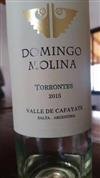
2015 Domingo Molina Torrontés 87 Points
Argentina, Valles Calchaquíes, Salta, Cafayate
(11/5/2015)
Strong lime on the nose. This was pretty low acidity, a touch buttery, and then maybe some vanilla notes. Some almost weed-like notes as well. There's a sharpness to the wines which softened with some time and the floral notes came forward then. Paired better with a goat cheese than alone. Ok wine, but we had some better Torrontes on the trip.
Post a Comment / Do you find this review helpful? Yes - No
2013 Finca Domingo Malbec 78 Points
Argentina, Valles Calchaquíes, Salta, Cafayate
(11/5/2015)
Very fruity at the beginning, then it morphs into this kindof offputting cheap wine flavor which is tougher to get down. Not really my style.
Post a Comment / Do you find this review helpful? Yes - No
2012 Domingo Molina Malbec
Argentina, Valles Calchaquíes, Salta, Cafayate
(11/5/2015)
Aged for 1.5 years in French oak, the vineyards are ~6k feet above sea level. Softer wine than the Finca Domingo, the fruit lasts a bit longer here, but still a very quick finish at the end.
Post a Comment / Do you find this review helpful? Yes - No
2015 Finca Domingo Torrontés Late Harvest (Tardío)
Argentina, Valles Calchaquíes, Salta, Cafayate
(11/5/2015)
A bit more acidity here, very sweet, kindof a half formed rock candy, peach. It's your basic sweet wine. Didn't have enough going on for Mike, but I am a sucker for some sugar so I didn't mind too much although I'll agree there are many better.
Post a Comment / Do you find this review helpful? Yes - No