
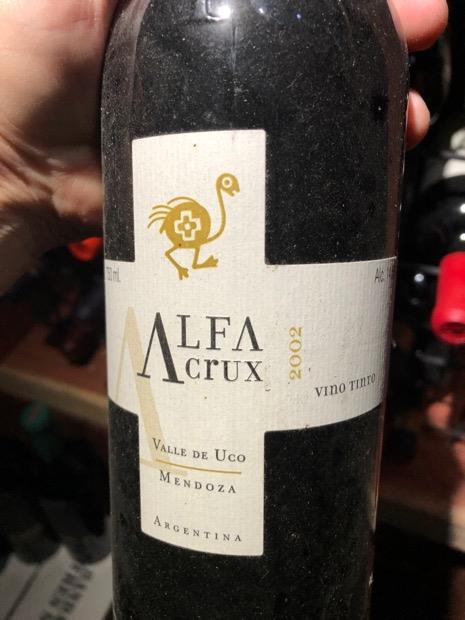
2002 Bodega O. Fournier Alfa Crux Blend
Tempranillo Blend (Tempranillo)
Drink by: (Add My Drinking Window)
Advertisement
Popular Wines Like This
Who Likes This Wine(6)
-

tendring
4,895 Tasting Notes
-
Uncle John
800 Tasting Notes
-
pavement5
473 Tasting Notes
Community Tasting Notes (12) Avg Score: points
View all 12 Community Tasting Notes
What Do You Think? Add a Tasting Note
Pro Reviews
Professional reviews have copyrights and you can view them here for your personal use only as private content. To view pro reviews you must either subscribe to a pre-integrated publication or manually enter reviews below. Learn more.
JancisRobinson.com
-
By Julia Harding, MW
(O Fournier, Alfa Crux Uco Valley Valle del Uco Red) Subscribe to see review text.
3/5/2017, (See more on JancisRobinson.com...) -
By Jancis Robinson, MW
(O Fournier, Alfa Crux Uco Valley Valle Del Uco Red) Subscribe to see review text.
5/31/2016, (See more on JancisRobinson.com...) -
By Jancis Robinson, MW
(O Fournier, Alfa Crux Blend Uco Valley Red) Subscribe to see review text.
10/21/2014, (See more on JancisRobinson.com...)
WineAlign
-
By David Lawrason
(O. Fournier Alfa Crux Tempranillo/Malbec/Merlot, Mendoza red) Login and sign up and see review text.
10/13/2010, (See more on WineAlign...) -
By John Szabo, MS
(O. Fournier Alfa Crux Tempranillo/Malbec/Merlot, Mendoza red) Login and sign up and see review text.
10/6/2010, (See more on WineAlign...)
JancisRobinson.com
-
By Jancis Robinson, MW
(O Fournier, Alfa Crux Blend Mendoza Red) Subscribe to see review text.
10/10/2008, (See more on JancisRobinson.com...) -
By Jancis Robinson, MW
(O Fournier, Alfa Crux Mendoza Red) Subscribe to see review text.
8/14/2008, (See more on JancisRobinson.com...) -
By Julia Harding, MW
(O Fournier, Alfa Crux Blend Mendoza Red) Subscribe to see review text.
5/6/2008, (See more on JancisRobinson.com...) -
By Julia Harding, MW
(O Fournier, Alfa Crux Uco Valley Red) Subscribe to see review text.
10/22/2007, (See more on JancisRobinson.com...)

-
By Stephen Tanzer
(Bodegas O. Fournier Alfa Crux Mendoza) Login and sign up and see review text.
November/December 2005, IWC Issue #123, (See more on Vinous...)
NOTE: Some content is property of JancisRobinson.com and WineAlign and Vinous.
Add a Pro Review
Add Your Own Reviews:
Wine Definition
- Vintage2002
- TypeRed
- ProducerBodega O. Fournier
- VarietyTempranillo Blend
- DesignationAlfa Crux Blend
- Vineyardn/a
- CountryArgentina
- RegionMendoza
- SubRegionValle de Uco
- Appellationn/a
- Display optionsDefault
- UPC/EAN Code7798098894917
4/19/2013 - Uncle John wrote: 92 Points
Double decanted and brought to restaurant. Medium body with balanced fruit, tannins and a smooth finish. Not an over extracted/oaked malbec blend but a very European feel to this wine. Alfa Crux Blend consists of 75% Tempranillo and 25% Malbec.
Do you find this review helpful? Yes - No / Comment
8/10/2012 - CjE wrote: 92 Points
Full bodied wine with great structure and intense flavour. Ready to drink now. I wouldn't wait too much longer.
Do you find this review helpful? Yes - No / Comment
12/17/2011 - drnegao wrote: 94 Points
Very powerfull red, really intense, very good blend
Do you find this review helpful? Yes - No / Comment
8/23/2011 - tawc wrote: 90 Points
really enjoyed this. big berry, tannins, structure , some smokiness, quite alluring. was curious to try O Fournier given magazine writeups and would definietly buy again. still worth cellaring.
Do you find this review helpful? Yes - No / Comment
7/4/2011 - ashife Likes this wine: 91 Points
After decanting, kept opening up for about 2 hours. Beautiful bottle and a great value.
Do you find this review helpful? Yes - No / Comment